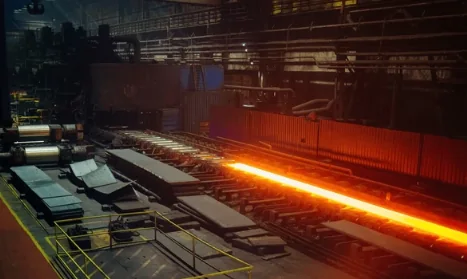
Iron and steel production
  1. Home
  2. Experience
  3. Sectors
  4. Iron and steel — what makes this sector technically different.

Iron and steel — what makes this sector technically different.

One heat becomes several products with several CN codes. The allocation rule written before the period is the difference between a defensible number and a reconstructed one.

Hardest data points

Where inventories in this sector fail.

  • The production route itself — blast furnace, smelting reduction, direct reduction or electric arc — each has a different boundary and a different set of sources
  • Carbon entering in scrap, alloys and graphite and carbon remaining in product, slag and waste, which the mass balance method exists to capture
  • Scrap share, and the distinction between post-consumer scrap (zero embedded emissions) and pre-consumer scrap, which must be reported as a percentage
  • Blast furnace gas, coke oven gas and converter gas treated as fuel inside the boundary, with the deduction that prevents double counting where waste gas generates electricity
  • Electrode and electrode paste consumption in the electric arc route, which is a direct source and is routinely omitted
  • Allocation of a single heat across a rolling programme, and whether the rule was fixed before production or fitted afterwards
  • Precursors — pig iron, DRI, ferro-alloys, crude steel bought in — and whether actual precursor data came from a verification report with the correct accreditation scope
  • Sintered ore, which sits in this family but carries indirect emissions where the rest of iron and steel does not
What is examined

The evidence we will ask for.

  • The monitoring plan with the production processes defined and the routes distinguished
  • Mass balance inputs and outputs including carbon content of scrap, alloys and slag
  • Waste gas flows, net calorific values and the correction factor applied to exported gas
  • Tonnes of scrap per tonne of crude steel and the pre-consumer percentage
  • The allocation rule as documented before the reporting period, with the production records it applies to
  • Verification reports for any purchased precursor whose actual value is used
CBAM

What CBAM says about this sector specifically.

Iron and steel is direct emissions only under Annex II to Regulation (EU) 2023/956 — with one exception. Sintered ore (CN 2601 12 00) is not in Annex II, so it carries indirect emissions as well. Installations producing several of these goods may define one joint production process, but only where none of the internally produced precursors is sold separately.

Scope note: CBAM verification accreditation has not been granted. Nothing here is offered as accredited CBAM verification before formal grant.
Most requested

The services this sector asks for.

Product carbon footprint

Functional unit, boundary, allocation and the model behind the number.

The product route

CBAM readiness

The evidence file, the monitoring plan and the decision on actual values.

The CBAM route
The normative frame

The standards the work runs under.

ISO 14064-1:2018 · ISO 14064-3:2019 · ISO 14067:2018 for product claims. For CBAM: Regulation (EU) 2023/956 and Implementing Regulation (EU) 2025/2547.

Scope position: Confirm the specific activity against Accreditation Schedule 1225009B at pre-engagement.

Other sectors, different evidence problems

Describe the claim — not the service.

Tell us what must be relied on, who will rely on it and by what date. We will confirm the correct programme, evidence requirement and responsible entity — or tell you it is outside our scope.