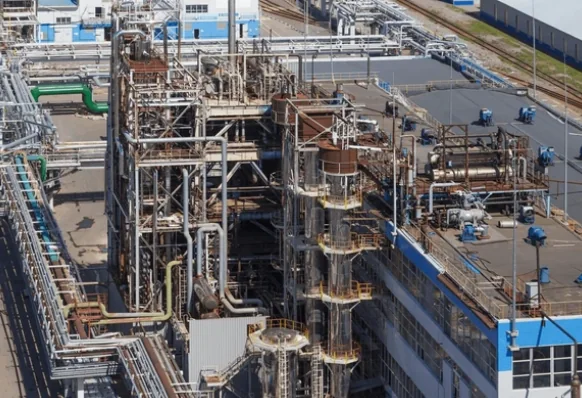
Fertilisers production
  1. Home
  2. Experience
  3. Sectors
  4. Fertilisers — what makes this sector technically different.

Fertilisers — what makes this sector technically different.

The only sector where a catalyst can move the reported figure more than a capital project, because N₂O abatement performance is measured, not assumed.

Hardest data points

Where inventories in this sector fail.

  • N₂O measured continuously at the nitric acid plant rather than derived from an abatement guarantee, including start-up, shutdown and upset conditions
  • The global warming potential applied to N₂O — 265 tonnes CO₂e per tonne under the set the regulation uses
  • Combustion N₂O, which is excluded, being mixed into the process figure that is included
  • CO₂ captured from the reformer and bound into urea, which under CBAM is treated as emitted and gets no deduction
  • CO₂ received from another installation for urea synthesis, which counts at the urea plant if it was not already counted at source
  • Feedstock natural gas in ammonia production, which is monitored whether the input is energetic or non-energetic
  • Precursor data on purchased ammonia and nitric acid, expressed on a 100% pure-substance basis
  • The functional unit, which for this sector is kilograms of nitrogen — not tonnes of product
What is examined

The evidence we will ask for.

  • Continuous emission measurement records for N₂O with the measurement point and its calibration history
  • Abatement catalyst installation and replacement records, and performance across the period rather than at commissioning
  • Reformer CO₂ balance and the quantity bound into urea
  • Transfer records for any CO₂ received from another installation, with evidence of whether it was counted at source
  • Natural gas consumption split between energetic and feedstock use
  • Nitrogen content per product, and the basis for any averaging across a nitrogen range
CBAM

What CBAM says about this sector specifically.

Fertilisers carry both direct and indirect emissions — the family is not in Annex II. The functional unit is kilograms of nitrogen. Ammonia is a precursor to both nitric acid and urea; hydrogen is a precursor to ammonia where separately produced. CO₂ bound into urea is treated as emitted at the installation and does not qualify for a deduction as permanently chemically bound.

Scope note: CBAM verification accreditation has not been granted. Nothing here is offered as accredited CBAM verification before formal grant.
Most requested

The services this sector asks for.

Product carbon footprint

Functional unit, boundary, allocation and the model behind the number.

The product route

CBAM readiness

The evidence file, the monitoring plan and the decision on actual values.

The CBAM route
The normative frame

The standards the work runs under.

ISO 14064-1:2018 · ISO 14064-3:2019 · ISO 14067:2018 for product claims. For CBAM: Regulation (EU) 2023/956 and Implementing Regulation (EU) 2025/2547.

Scope position: Confirm the specific activity against Accreditation Schedule 1225009B at pre-engagement.

Other sectors, different evidence problems

Describe the claim — not the service.

Tell us what must be relied on, who will rely on it and by what date. We will confirm the correct programme, evidence requirement and responsible entity — or tell you it is outside our scope.